
Last updated October 16, 2026
 Wrought iron
 Wood & steel frame
 Farm & ranch
 Sliding driveway gates
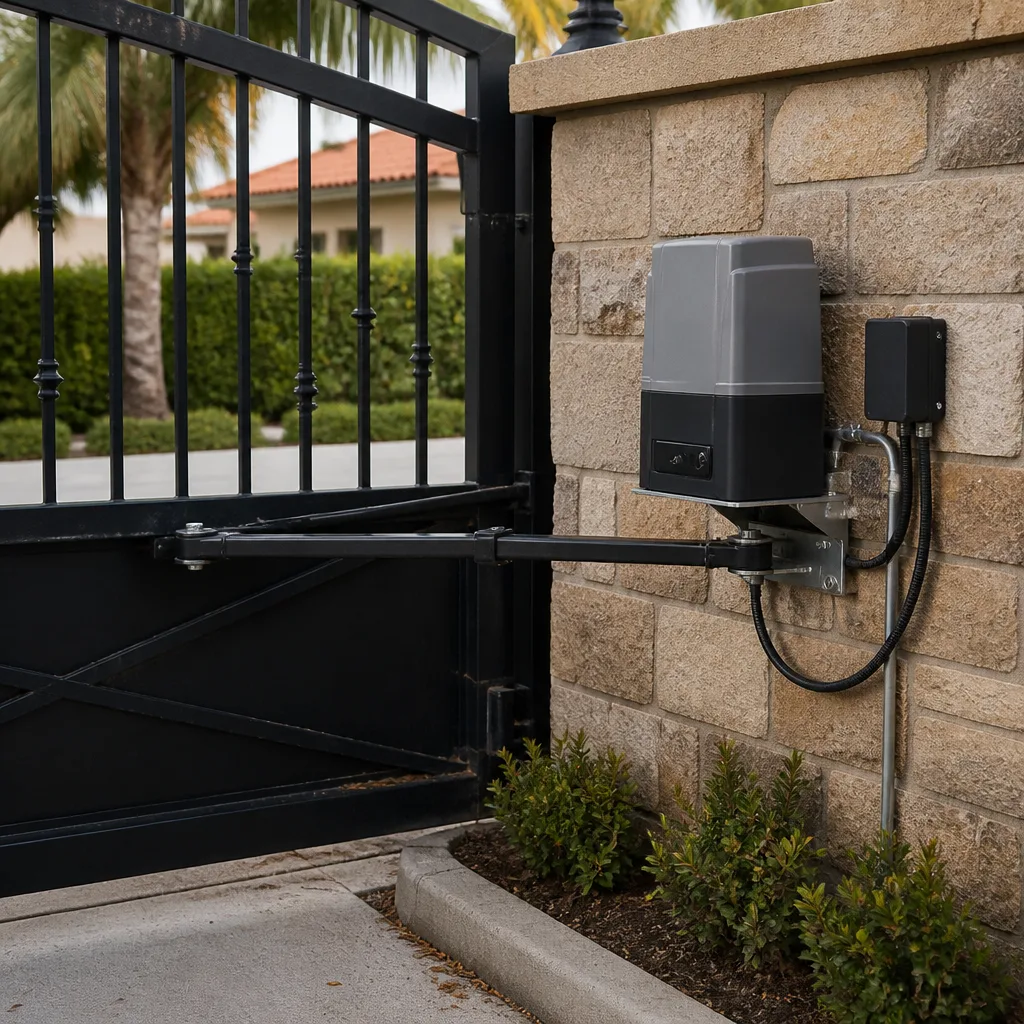 LiftMaster operators
Free on-site gate assessment - hinges, posts, and your LiftMaster or Nice gate operator checked before anything is quoted
The assessment is free and the quote is the invoice.
Get your free estimateGate Repair Warning Signs: A Dallas Homeowner’s Reference Guide
A gate that hesitates for two seconds before opening isn’t “getting old” – it’s displaying a limit switch symptom that, if left unaddressed, will burn out a motor that costs four times as much to replace as the original switch adjustment. Most gate failures in Dallas announce themselves weeks or months before the gate actually stops working. The problem is that nobody teaches homeowners how to read those signals. This guide covers 12 observable warning signs, maps each one to the component that’s actually failing, and tells you which symptoms mean “schedule within the week” and which mean “call today.” For more guides & resources, see our blog.
Styles & brands we work with
Quick Answer
The most common gate repair warning signs in Dallas are hesitation before opening, reversing mid-close, grinding or scraping sounds, drift after stopping, reduced remote range, and a control board that beeps without stopping. Each symptom points to a specific component – a limit switch, a capacitor, a gear set, a loop detector, or a receiver board. If you’re planning to hire help, read our How to Hire a Gate Repair Contractor in Dallas: A Step-by-Step Guide first. Catching these symptoms early typically means a $150 – $400 targeted repair instead of a $900 – $1,500 motor or operator replacement.
Table of Contents
- Hesitation Before the Gate Moves
- Premature Reversal Mid-Close
- Grinding, Scraping, or Squealing Sounds
- Gate Drift After Stopping
- Remote Range Loss
- Control Board Beeping Without Stopping
- Gate Runs Slowly or Struggles in Cold Weather
- Wheel Misalignment and Track Wear
- The Dallas Clay Soil Factor: Post-Lean vs. Limit Switch Problems
- Urgency Tiers: Which Symptoms Mean What
- How to Document a Symptom So the Diagnosis Call Goes Faster
- Common Mistakes to Avoid
- When to Call a Professional
- Frequently Asked Questions
- The Bottom Line
Hesitation Before the Gate Moves
When you press the remote or keypad and the gate pauses for two to five seconds before it starts moving, the most common culprit on a swing gate is a failing capacitor. The capacitor stores the electrical charge the motor needs to get the gate moving from a dead stop. As capacitors age – and they age faster in Dallas heat because high ambient temperatures degrade the dielectric material inside – they lose their ability to deliver that initial surge. The motor still works, but it needs a moment to build enough charge through the circuit.
On a slide gate, hesitation more often points to a limit switch that has drifted out of adjustment. The control board thinks the gate is still in the closed position, so there’s a logic delay while the board reconciles the reported position with the actual position. This distinction matters because the repair is different. A capacitor replacement on a swing operator typically runs $120 – $250 including the part. A limit switch adjustment or replacement on a slide gate runs $100 – $200. Neither is an emergency, but both are “schedule within the week” items because a failing capacitor that isn’t replaced will eventually take the motor with it. A motor replacement for a swing gate operator in Dallas averages $700 – $1,100.
We tell homeowners in neighborhoods like Lake Highlands and Preston Hollow to pay attention to whether the hesitation is consistent or intermittent. A consistent two-second delay every time points to the capacitor or limit switch. An intermittent delay that happens mostly in the morning or after rain points to moisture in a connection or a photo-eye alignment that’s barely within tolerance.
Premature Reversal Mid-Close
A gate that starts closing and then reverses direction before it reaches the fully closed position is almost always reporting an obstruction detected by the safety system. The two components responsible are the photo-eyes and, on automatic gates in Dallas that use vehicle detection, the loop detector embedded in the driveway. When a photo-eye is misaligned by even a quarter inch – which happens when the gate post shifts or when a lawn crew bumps the sensor housing with a mower – the beam breaks intermittently and the control board reads that as a vehicle or person in the gate’s path. The board responds exactly as it’s designed to: it reverses.
The test that narrows the diagnosis without any tools is to watch where the reversal happens. If the gate consistently reverses at the same point in its travel, that’s usually a physical obstruction or a damaged gear tooth at that position on the rack or the arm. If the reversal point varies, the problem is electrical – a photo-eye, a loop detector, or a worn wire connection. A varying reversal point on a FAAC swing operator often traces to a photo-eye mount that has loosened just enough to let the sensor drift in the wind. On BFT slide operators, the same symptom more often traces to a loop detector that’s picking up interference from a newly installed landscape lighting circuit.
Within the city of Dallas, a photo-eye realignment or replacement runs $85 – $180. A loop detector replacement runs $250 – $450, and that’s a “call today” item if the gate is your primary security barrier, because a gate that reverses without closing doesn’t secure anything.
Grinding, Scraping, or Squealing Sounds
A healthy gate operator makes a low, even hum. Grinding means metal is touching metal where it shouldn’t. Scraping means the gate itself is dragging on something. Squealing usually means a bearing or a pulley bushing has lost its lubrication or its surface finish.
The first step is to isolate the source. Stand beside the operator while someone else cycles the gate. If the grinding sound comes from the motor housing, the gear set inside the operator has worn. The grease has broken down – Dallas heat accelerates lubricant failure, especially in operators mounted in full sun on an east- or west-facing wall – and the gears are now running dry. Continuing to run the gate in this condition scores the gear faces. A gear set replacement on most Linear and Viking operators runs $200 – $400. A full operator replacement, which becomes necessary when the gears seize and the motor burns out, runs $900 – $1,500 installed.
If the scraping comes from the gate itself, check the bottom edge where the gate meets the concrete. In Dallas, where the soil shrinks and swells with moisture, concrete driveways move seasonally. A gate that cleared the driveway by two inches when it was installed in January may be dragging in July. The fix is often as simple as adjusting the gate’s height or regrading a low spot in the drive. If the squealing comes from a wheel or hinge, that’s a bearing or bushing – a $50 – $120 fix if caught early, and a damaged wheel assembly if not.
Gate Drift After Stopping
When a slide gate coasts to a stop and then drifts an inch or two backward, or a swing gate settles visibly after the operator stops it, the problem is mechanical rather than electrical. The operator is stopping the gate correctly; the gate is moving after the stop because something in the drive train or the mounting has too much play.
On a slide gate, drift usually means the chain or belt tension has loosened. A chain that has stretched over years of opening and closing cycles needs to be re-tensioned or, if the stretch exceeds what the tensioner can absorb, replaced. The chain on a slide gate in Dallas gets extra wear from the fine dust that blows through during dry spells. That dust works into the chain links and accelerates wear at every pin. A chain replacement runs $150 – $350 depending on gate length. Belt-drive slide gates have the same symptom but different parts, and the belt replacement cost is similar.
On a swing gate, drift after stopping usually means the operator’s internal limit has drifted or the operator mounting bracket has loosened at the post. A loose bracket may also produce a clunking sound when the gate stops, because the entire operator shifts against its mounting bolts. This one is worth tightening promptly – a loose operator bolt in Dallas wind conditions will wallow out the mounting hole, and then you’re looking at drilling and re-tapping or replacing the bracket entirely.
Remote Range Loss
Nobody notices their remote range until it drops from 80 feet to 15 feet, and then they notice it every time they pull into the driveway. Remote range loss has four common causes: a weakening battery in the transmitter, a failing capacitor in the operator’s receiver board, interference from a new device on a nearby frequency, and physical changes to the installation environment.
Replace the remote battery first – that’s a $3 fix that resolves maybe half of all range complaints. If the range is still short with a fresh battery, test a second remote. If both remotes show the same reduced range, the problem is on the receiving end. On Ghost Controls and Mighty Mule systems, the receiver board’s sensitivity can degrade as filtering capacitors age. On any brand, a metal object placed between the remote and the antenna – a new steel gate panel, a metal storage shed, a vehicle parked in a new spot between the driveway and the house – will reduce range because the radio signal can’t pass through conductive material.
One Dallas-specific note: some home security systems and some neighborhood-scale cellular equipment operate in the same general frequency bands as gate remotes. If your range dropped noticeably after a new fence, a new shed, or a new home security install, interference is worth checking before you pay for a receiver board you don’t need.
Control Board Beeping Without Stopping
A control board that beeps continuously or in a repeating pattern is communicating a specific fault code, not being annoying. Each manufacturer uses a different beep sequence to report different problems. On FAAC boards, a continuous beep during gate movement usually means an obstruction was detected. On BFT boards, two beeps repeated in a loop often indicates a battery fault in the backup system. On Linear boards, a repeating single beep can mean the gate has exceeded its maximum run time on that cycle, which points to a mechanical bind or a limit switch failure.
Before calling anyone, write down exactly what the beep sounds like: continuous, single repeating, double repeating, or a code-like sequence. Count the beeps in one cycle. Note whether the beeping happens only during operation, only when the gate is idle, or constantly. That sequence is the board telling you what’s wrong, and a technician who knows the brand can often diagnose the fault from your description over the phone.
If the beeping is accompanied by a flashing light on the board, note the number of flashes too. On Viking and DoorKing equipment, the LED flash pattern is the primary diagnostic code and it corresponds to a table in the installation manual. Taking 30 seconds to document the pattern can save you a diagnostic charge for a problem you can describe accurately.
Gate Runs Slowly or Struggles in Cold Weather
Dallas doesn’t get a true northern winter, but it gets enough February cold snaps to expose operator problems that stay hidden in July. For maintenance tips through every season, see our Seasonal Gate Repair Care for Dallas: Year-Round Homeowner’s Guide. When a gate runs noticeably slower in cold weather, the first suspect is the operator’s oil or grease. Lubricants thicken as temperature drops, and a gearbox that was designed for a lighter-weight lubricant will strain against cold-thickened grease. This is especially common on operators installed with aftermarket lubricants or on older units where the factory grease has broken down and been replaced with something heavier.
The second suspect is battery condition on operators that use a DC motor with a battery backup. Battery capacity drops sharply in cold temperatures. A battery that tested fine on a summer service call may deliver only 60% of its rated capacity at 35 degrees, and the motor compensates by drawing more current and running slower. If your gate runs slower than normal but only when the temperature is below 45 degrees, that’s a battery health issue, not a motor issue. Battery replacement on most gate operators runs $80 – $200.
This matters because a homeowner in Dallas who calls for service on a “slow gate” in February might be quoted a motor replacement when the actual problem is a battery. A technician who tests the battery under load, not just with a voltage meter, will find the difference. That’s the kind of distinction that separates a padded invoice from an honest diagnosis.
Wheel Misalignment and Track Wear
Slide gates in Dallas ride on wheels along a track, or on a cantilever system that doesn’t use a ground track at all. When a wheel wears, the gate starts leaning slightly. When the gate leans, the chain tension changes, the limit switch positions shift, and the gate starts acting like it has an electrical problem when the actual issue is a $40 wheel.
Here is the observation test: stand at either end of the gate and sight down the top rail. A properly aligned gate is a straight line. If the top rail bows or dips, a wheel is worn or a post has moved. Then check the wheels themselves. A wheel with a flat spot or one that’s visibly smaller than its neighbors needs replacement. Running a gate on a flat-spotted wheel for months scores the track and then you’re looking at track replacement on top of wheel replacement. The track is the expensive part – track replacement on a long driveway gate in Dallas runs $600 – $1,200 – and it’s almost always avoidable if the wheel gets swapped early.
For homeowners in older Dallas neighborhoods where the gate was installed decades ago, wheel and track wear tends to show up first on the gate’s front wheel, which carries more load when the gate is closed, and on the rear wheel when the gate is open. It’s worth walking your gate line every few months. It takes 60 seconds and it catches problems while they’re still wheel-sized.
The Dallas Clay Soil Factor: Post-Lean vs. Limit Switch Problems
Dallas sits on expansive clay soil. That’s the single most important environmental factor in local gate maintenance because clay soil expands when it’s wet and shrinks when it’s dry, and it does both with more force than most homeowners realize. A gate post that was plumb when it was installed in a wet March may be leaning two or three degrees out of vertical by August. That lean changes the geometry of the entire gate system.
Here’s how post-lean differs from a misaligned limit switch, even though both can cause premature reversal. When a limit switch drifts out of adjustment, the gate reverses at the same point in its travel every time. The reversal point is consistent because the switch is reporting the same wrong position on every cycle. When a post has leaned, the reversal point varies. The gate binds slightly at first, then progressively more as the lean worsens, because the hinge geometry is fighting itself. The gate may reverse three feet from closed, then two feet, then four feet, depending on temperature and soil moisture. That variability is the tell.
Post-lean repair in Dallas is a specialty all its own. Depending on the size of the post and the severity of the lean, the fix ranges from a post re-set with new concrete – $300 – $600 – to a steel sleeve reinforcement or complete post replacement. The cheaper fix, adjusting the limit switches to compensate for the lean, buys time but doesn’t stop the post from moving. If you’re in a neighborhood with known expansive soil problems – areas around White Rock Lake, parts of East Dallas, and much of the I-20 corridor south of downtown – post movement should be your default suspicion for any recurring alignment problem.
Urgency Tiers: Which Symptoms Mean What
Not every warning sign is an emergency. Some are. Here is how we categorize the symptoms in this guide when we’re advising a homeowner in Dallas on the phone.
Call today:
- Gate reverses and fails to close, leaving the property unsecured
- Continuous beeping from the control board with the gate stuck in an open or partially open position
- Any sparking, burning smell, or smoke from the operator housing
- Post visibly leaning more than two inches from vertical, especially on a heavy ornamental gate
Schedule within the week:
- Consistent two-to-five second hesitation before the gate moves
- Grinding noise from the gearbox
- Gate drift after stopping that’s noticeable from inside the house
- Remote range loss unresponsive to fresh batteries
Can wait up to 30 days:
- Mild squeak that responds to the gate being manually cycled
- Slight slowdown in cold weather with no other symptoms
- Minor wheel wear visible on inspection
- Occasional beep that resolves on its own
Two symptoms in this guide are never “wait and see.” A gate that fails to secure is a security problem, not a convenience problem. And anything that smells like burning is an electrical fire risk inside the operator housing. Both of those warrant a call to a professional who can get to the property the same day.
How to Document a Symptom So the Diagnosis Call Goes Faster
Every minute a technician spends narrowing down possibilities on site is a minute you’re paying for. You can compress that time significantly by documenting what you observe before you call. Here is the exact process we recommend to homeowners in Dallas.
- Write down the exact symptom in one sentence. “The gate pauses about three seconds after I press the remote, then opens normally.” That’s better than “the gate is acting up.”
- Note the frequency. Does it happen every cycle, or once in five cycles? Intermittent problems point to connections, sensors, or interference. Constant problems point to components.
- Note the conditions. Does it happen in the morning but not the afternoon? After rain? Only when it’s cold? Dallas’s climate patterns – hot afternoons, occasional heavy rain, winter cold snaps – create symptom patterns that help with diagnosis.
- Record the sound or behavior. A 15-second phone video of the gate misbehaving is worth more than a five-minute verbal description. Show the video to the technician when they arrive.
- Check the beep or flash pattern. Count beeps, count flashes, write the sequence down.
- Gather your gate’s details. Brand name, model number if visible, and approximate age. The brand matters because repairs and parts differ. Knowing you have a FAAC rather than a Linear narrows the parts list before the truck rolls.
A homeowner who calls and says, “I have a BFT slide gate, it hesitates two seconds before opening, it’s consistent, and it’s been doing it about a week” gives the technician enough to show up with the right parts and the right diagnostic plan. That’s the difference between a one-visit repair and a two-visit repair.
Common Mistakes to Avoid
- Ignoring hesitation as “normal aging.” Gates don’t hesitate because they’re old. They hesitate because something specific is failing. A two-second hesitation is a $150 capacitor. Waiting six months turns it into a $900 motor replacement.
- Overriding a reversing gate with the manual release. When you release the operator and push the gate by hand, you’re bypassing the safety system that detected the obstruction. The obstruction is still there, and you’re now cycling the gate with bad geometry or a bad component. That makes the mechanical damage worse.
- Spraying WD-40 or household lubricant on operator gears. Gate operators use specific greases. Household lubricants break down the factory grease, attract dust – which in Dallas is more than a small problem – and shorten gear life. Use the lubricant the operator manufacturer specifies, or leave lubrication to a technician who carries the right products.
- Treating remote range loss as a battery-only problem after one battery replacement. If two remotes with fresh batteries both show reduced range, the battery was never the issue. Continuing to replace transmitter batteries while the receiver board degrades turns a $150 receiver repair into a $500 full board replacement when the capacitor finally fails completely.
- Ignoring post lean because “the gate still works.” A leaning post is still moving. The gate works right up until the day the post moves far enough to bind the gate completely – or until the hinge welds crack. Post re-setting costs a fraction of post replacement plus gate rebuilding, but only if it’s caught while it’s still a lean.
- Cycling the gate repeatedly to “see if it fixes itself.” Every cycle of a binding gate adds wear to the gear set, the chain, and the motor windings. If the gate binds, stop cycling it and call someone. The third cycle isn’t going to be better than the second.
When to Call a Professional
Some gate maintenance is genuinely DIY-appropriate: cleaning photo-eye lenses, checking visible mounting bolts for tightness, clearing leaves and debris from slide tracks, and recording symptom patterns. Most actual repairs are not. High-tension springs on gate hardware can release stored energy suddenly. Gate motors run on line voltage and sometimes carry stored charge in capacitors that can deliver a serious shock even with the power off. A gate that weighs 400 or 600 pounds will injure you if it falls or swings unexpectedly while you’re working on it. We don’t recommend opening an operator housing unless you understand the electrical system inside it.
The deciding factor is usually the component involved. Capacitors, gear sets, control boards, loop detectors, and post re-setting are all professional work. If you’ve documented the symptom and you’re still not sure what it means, that’s a phone call. Carver Gate Repair Dallas offers Gate Repair services with free estimates in Dallas – call (940) 531-9746, describe your symptom using the documentation method above, and we’ll give you a written price before anything happens.
Frequently Asked Questions
Gate repair in Dallas typically costs $150 – $450 for most common fixes, including limit switch adjustments, capacitor replacement, photo-eye realignment, and wheel replacement. More involved repairs like gear set replacement run $200 – $400, while full motor or operator replacement averages $900 – $1,500. The price is quoted and agreed in writing before any work starts, so the number doesn’t change when the technician arrives. Call (940) 531-9746 for an exact quote on your gate.
Yes, many gate repairs in Dallas can be completed the same day the call comes in, especially if the symptom has been documented in advance so the technician arrives with the right parts. More involved repairs that require ordered components may take a few days, but the diagnosis and written quote happen on the first visit. Call (940) 531-9746 and describe what your gate is doing – we’ll tell you whether it’s a same-day fix.
A gate that reverses mid-close is responding to the safety system detecting an obstruction. That obstruction can be real – a vehicle, a person, or debris in the gate’s path – or it can be false, caused by a misaligned photo-eye, a failing loop detector, or a limit switch that has drifted. A consistent reversal point usually means a mechanical issue; a varying reversal point usually means an electrical or sensor issue.
Hesitation before opening is usually a failing capacitor on a swing gate operator or a drifted limit switch on a slide gate. The capacitor provides the electrical surge that starts the motor, and as capacitors age in Dallas heat they lose that ability. A consistent delay points to the component itself; an intermittent delay points to moisture in a connection or a photo-eye that’s barely in tolerance.
Yes, and it’s more common in Dallas than in most markets because the region’s expansive clay soil moves with moisture changes, shifting posts out of plumb. A leaning post creates a variable bind in the gate’s geometry, which shows up as inconsistent reversal points and progressive wear. Post re-setting in the Dallas area costs $300 – $600 if caught before the post weld or the hinge hardware fails.
Our technicians are trained on nine major gate-motor brands, including FAAC, BFT, Linear, Viking, LiftMaster, Ghost Controls, DoorKing, Elite, and Mighty Mule. The right diagnostic approach and the right parts differ by brand, and we match the repair to the system you already have installed rather than trying to sell you a different one. For more on what we handle, see our Gate Motor Repair in Dallas page.
The Bottom Line
A Dallas gate that hesitates, reverses, grinds, drifts, beeps, or loses remote range is not misbehaving randomly. Each symptom maps to a specific component, and each component has a known repair cost. Learning to read the symptoms correctly means catching a $150 capacitor before it becomes a $900 motor replacement, or catching a $40 wheel before it scores a $1,200 track. Document what the gate is doing, categorize the urgency, and call a professional who will quote the price in writing before any work starts. Gates don’t fix themselves, but the problems they announce early are usually the cheap ones to fix. For full-service Gate Repair in Dallas, Gate Installation in Dallas, or to ask about a symptom you’ve observed, call Carver Gate Repair Dallas at (940) 531-9746. We answer the phone when you call, and we’ll tell you straight what the problem is, what it costs, and how soon we can fix it.
Written by Lonnie Burke, Owner at Carver Gate Repair Dallas, serving Dallas since 2008.
See the difference
 Before
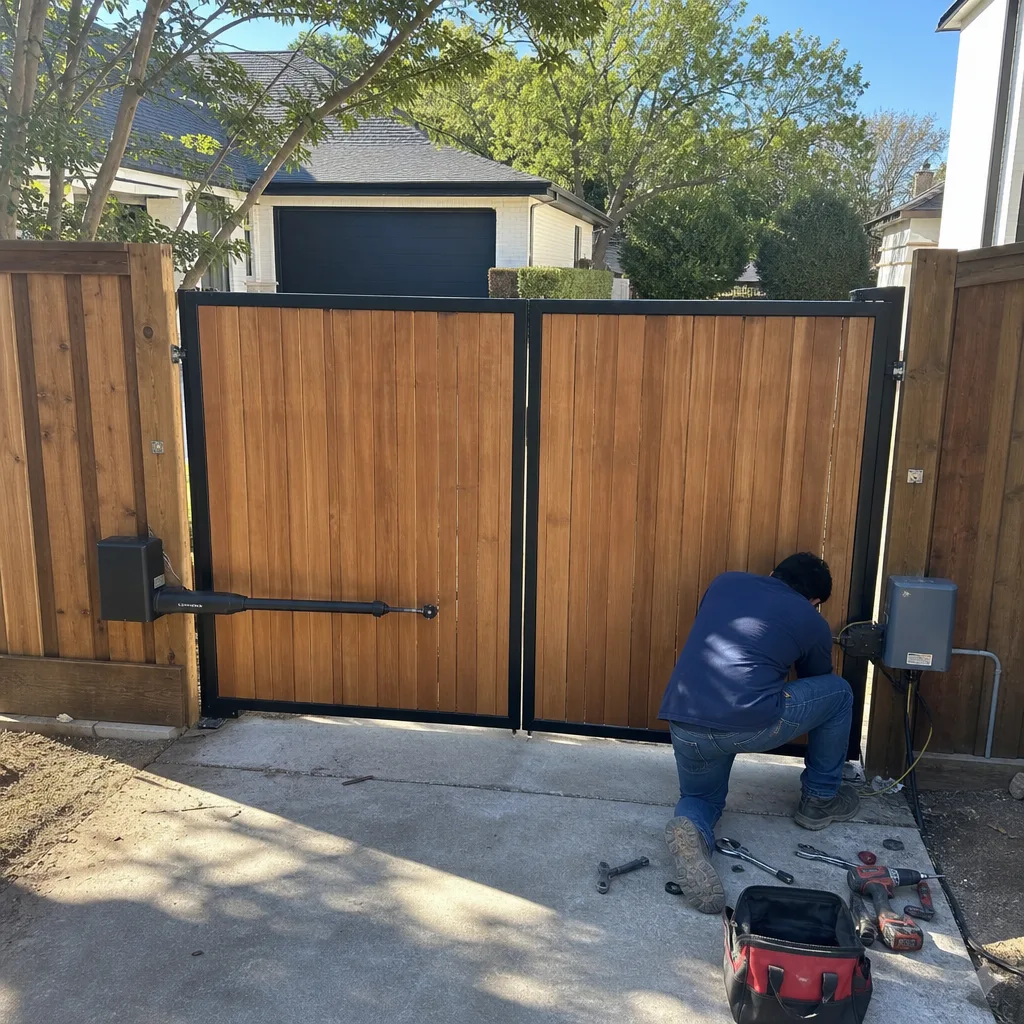 After
After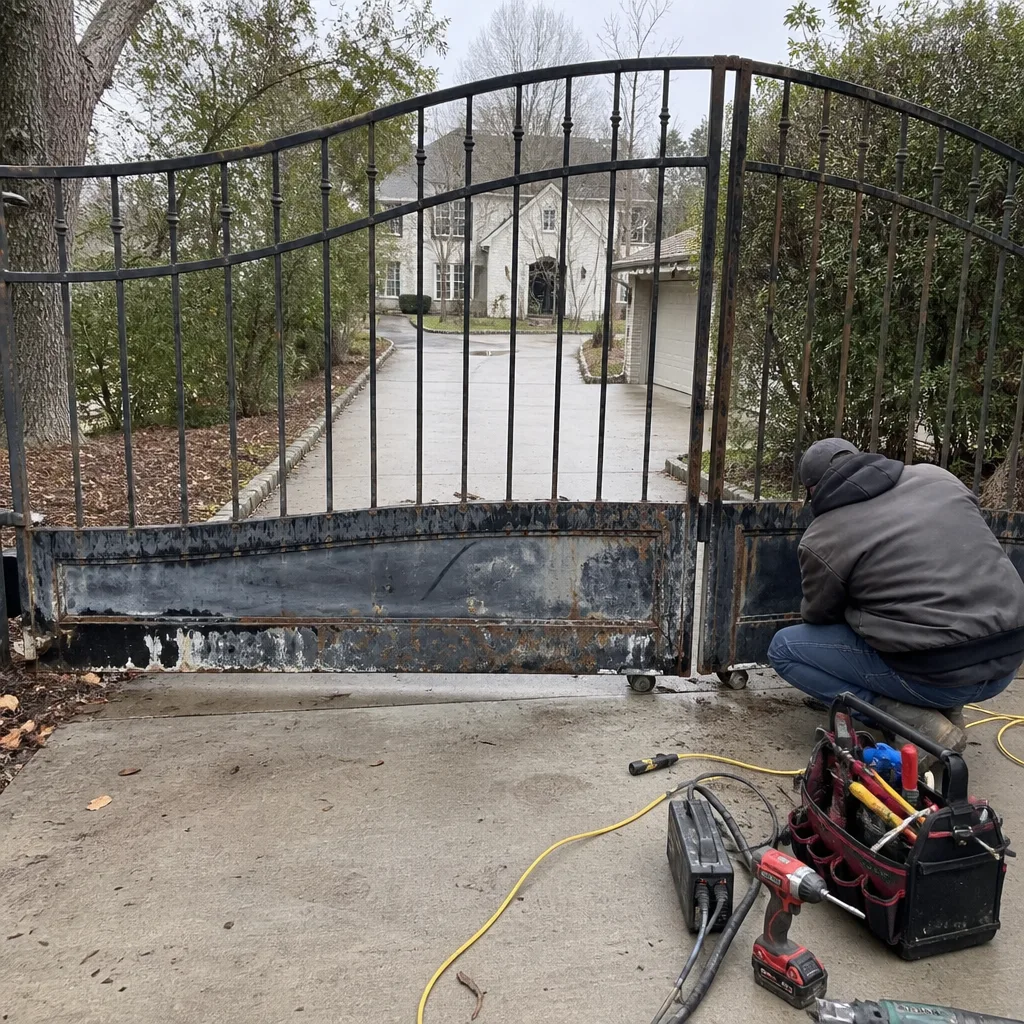 Before
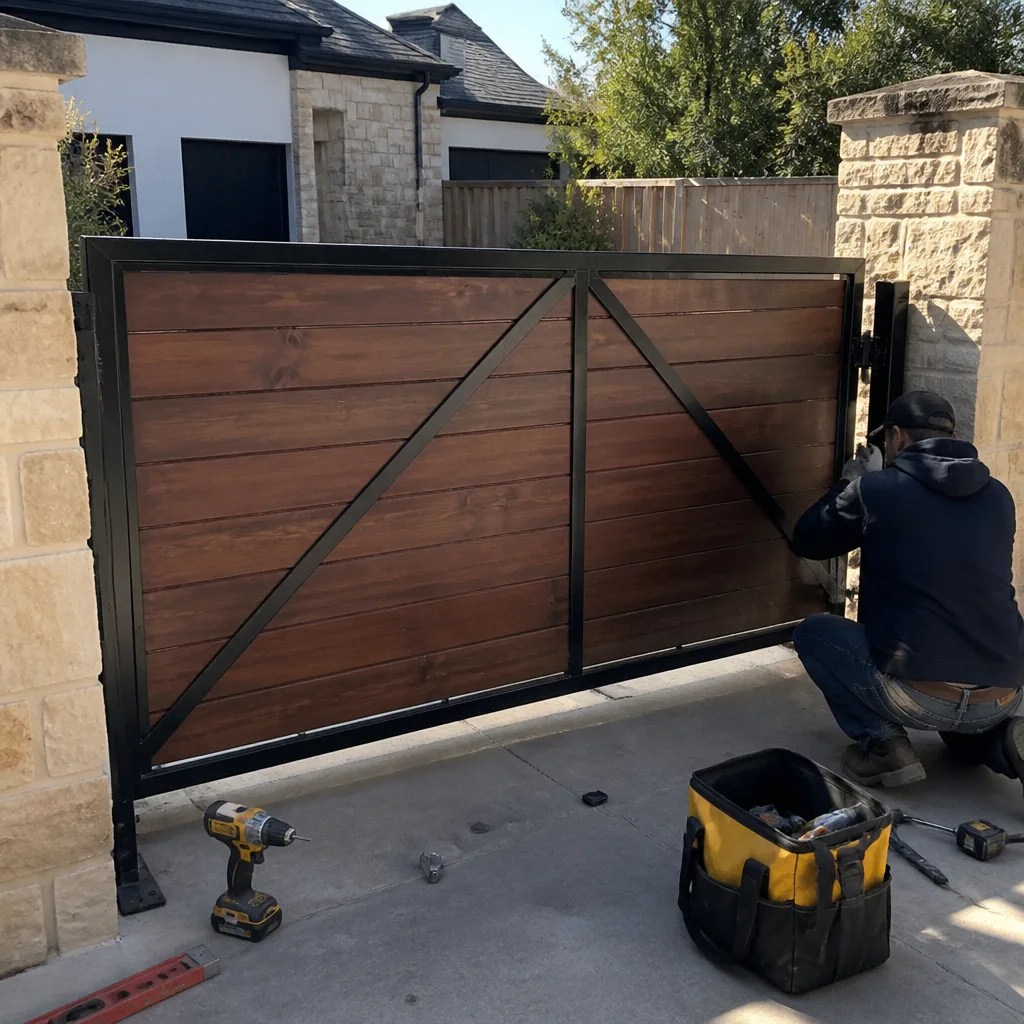 After
After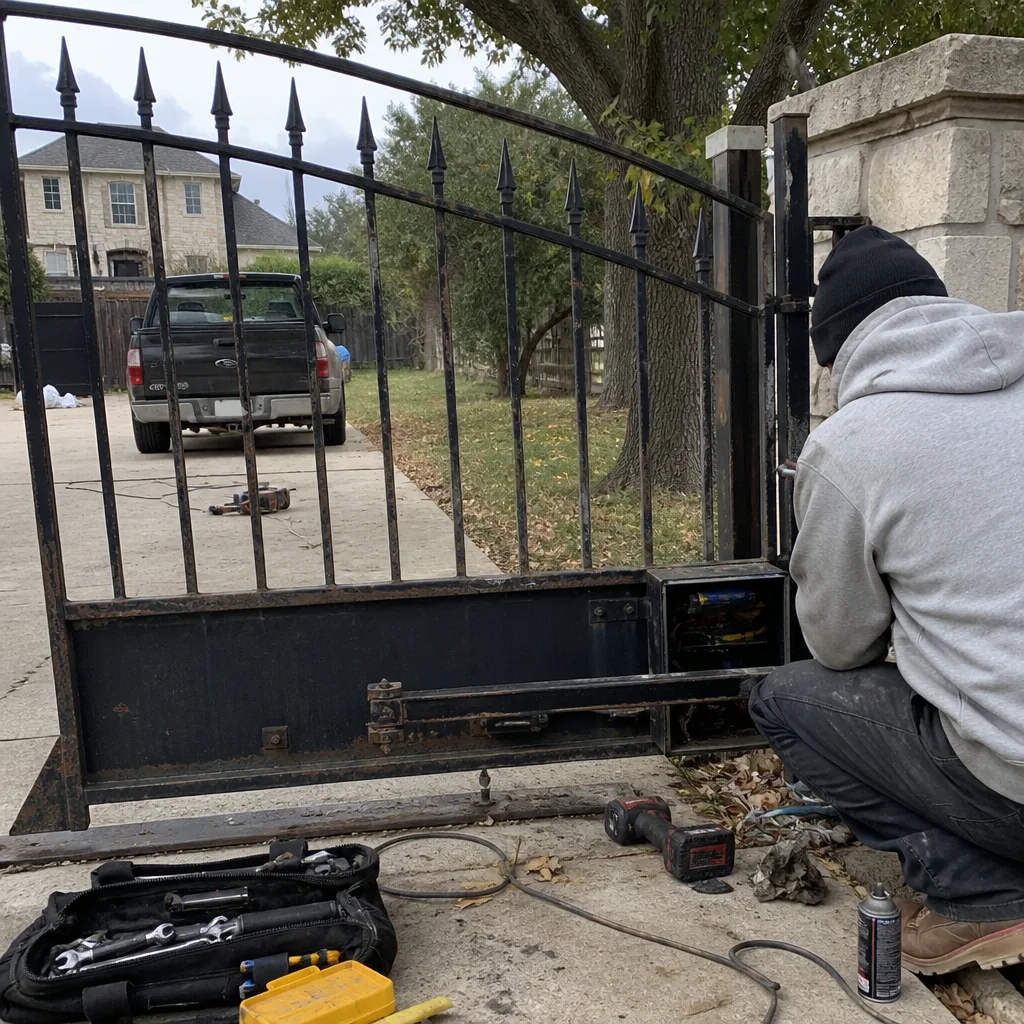 Before
 After
After